
















In the 21st century, smartphones have become an essential part of our everyday lives. We rely on them for almost everything: applications for work and school, bank transfers, keeping in touch with our loved ones, education, entertainment, finding information and countless other everyday tasks. Digital devices undoubtedly have their advantages and disadvantages, but the real question is: which side outweighs the other?
One of the first advantages that comes to mind is the ability to stay connected with our friends and family. This is also one of the reasons why many parents give smartphones to their children – although, in my opinion, this should only happen when it is truly necessary. If someone we care about lives in another city or even another country, smartphones make communication much easier. Calling or chatting online is probably the simplest way to keep in touch, especially compared with sending letters, which can be both time-consuming and expensive.
However, research suggests that the effects of smartphone use are not necessarily the same in every situation. A 2024 longitudinal study following more than 2,500 adolescents in South Korea found that longer smartphone use was associated with increased depressive symptoms among girls, while social and active use, such as communicating with friends and family, was associated with lower depressive symptoms. This suggests that it may not be enough to ask how much time someone spends on their phone; we also need to ask what they are doing on it.

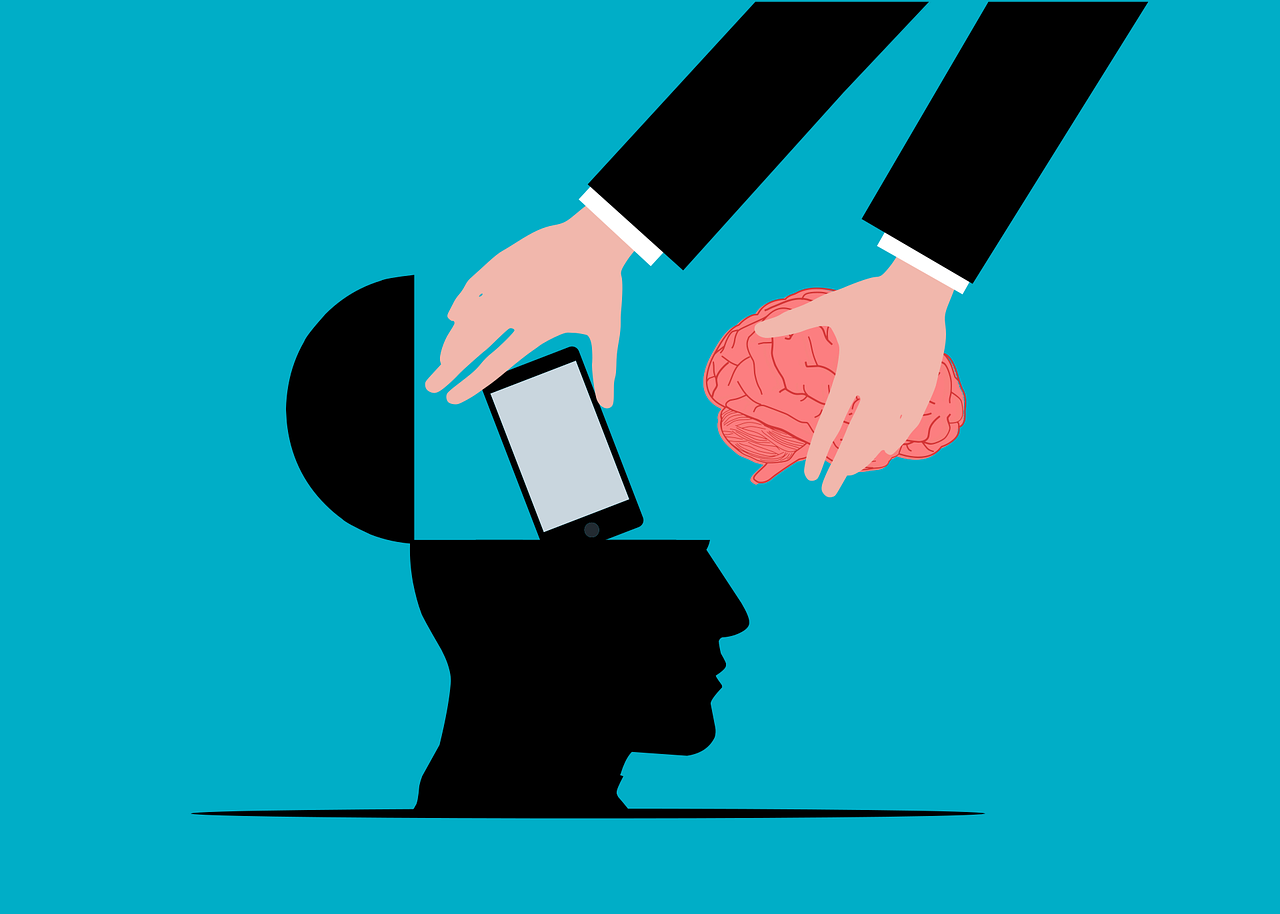
Phones, laptops and other digital devices have also become increasingly important in education. There are countless online platforms and applications for checking grades, taking notes, accessing learning materials and studying. Students can find information on websites, use online textbooks, complete exercises and look for explanations whenever they need them. It would be impossible to discuss modern education without mentioning AI tools. Opinions about their use are divided, but there is no doubt that they can be useful when used responsibly. We can ask AI to create a study plan, explain a difficult topic, help us with an exercise, prepare practice tasks or check our answers. In fact, I could probably list their possible uses all day. But this also raises another question: are we using AI to help us think, or are we slowly letting it think for us?
Researchers sometimes describe this as “cognitive offloading”: using an external tool to take over part of the mental work we would otherwise do ourselves. Recent research among university students suggests that AI can provide useful cognitive relief, but excessive cognitive offloading can also create problems for deeper learning and critical thinking.
Smartphones are equally useful in the workplace. They can be used for presentations, emails, online meetings, checking information and even dealing with invoices. At the same time, digital devices have become an ordinary part of our everyday routine: we use them to make payments, find directions and routes, look for information about events or charities, and arrange meetings or programmes with our friends. Marketing is also increasingly built around digital platforms and social media, which shows just how deeply technology has become integrated into modern life.
I could list countless other advantages, and I think most people could do the same. However, there is one disadvantage that, for me, deserves far more attention than the positives sides: safety. This is probably the one word that concerns me most when talking about digital devices.
For example, using the same password on every website is one of the biggest mistakes we can make. The reasoning is simple: if someone manages to obtain our password and gain access to one of our social media accounts, they may also try to access other accounts, including our bank account. This type of attack is known as credential stuffing.
Online safety does not stop there. We often hear claims that our phones and other digital devices are listening to us, while AI systems are constantly collecting and processing the information we provide.
Whether every such claim is true or not, the idea itself can be unsettling. Sometimes it can feel as if someone is always watching, listening and somehow knowing more about us than we realise. And that raises an uncomfortable question: what if that information were ever used against us?
If this were not enough to make us more cautious about electronics devices, there is another issue worth considering. As I mentioned before, AI can be extremely helpful, and that is undoubtedly a positive thing. However, it can also become a problem if we stop using it as a tool and start relying on it to think instead of us. Learning with AI can be useful, but allowing AI complete everything in our place can take away an important part of the learning process.
This question becomes especially interesting in schools. There is no single EU-wide ban on phone use in schools that applies to every member state. Instead, the European Union mainly focuses on digital education, digital literacy and the responsible use of digital tools, while the regulation of mobile phone use in schools is primarily left to individual countries. This raises an important question: does completely restricting phones actually help students concentrate, or should schools focus more on teaching young people how to use technology consciously and responsibly? If schools can restrict access to technology during the school day, perhaps the bigger question is whether they can also teach young people how to use it responsibly when nobody is there to take the phone away.
This is also relevant in Hungary, where new nationwide rules introduced in September 2024 classified mobile phones and other internet-capable smart devices as “use-restricted objects” in schools. Students are generally required to hand them in during the school day, although the rules also allow exceptions and authorised use in certain circumstances.
Another problem is our growing attachment to our phones. We do not only use them when we need them; we often reach for them simply because we want to, or even when we know we should not. If this habit becomes widespread, it could contribute to a society that is less independent, less educated and less capable of building genuine human relationships without the constant presence of a screen.
I do not have the power to tell anyone how they should use technology, nor do I want to pass judgment on other people’s choices. What I can say, however, is that it is remarkable how quickly technology continues to develop. The challenge is learning how to keep up with it without allowing it to take control of our lives. Using digital tools correctly, consciously and responsibly should be the real goal. After all, technology is supposed to make our lives easier – not live them for us.
————————————————
képek: pixabay.com